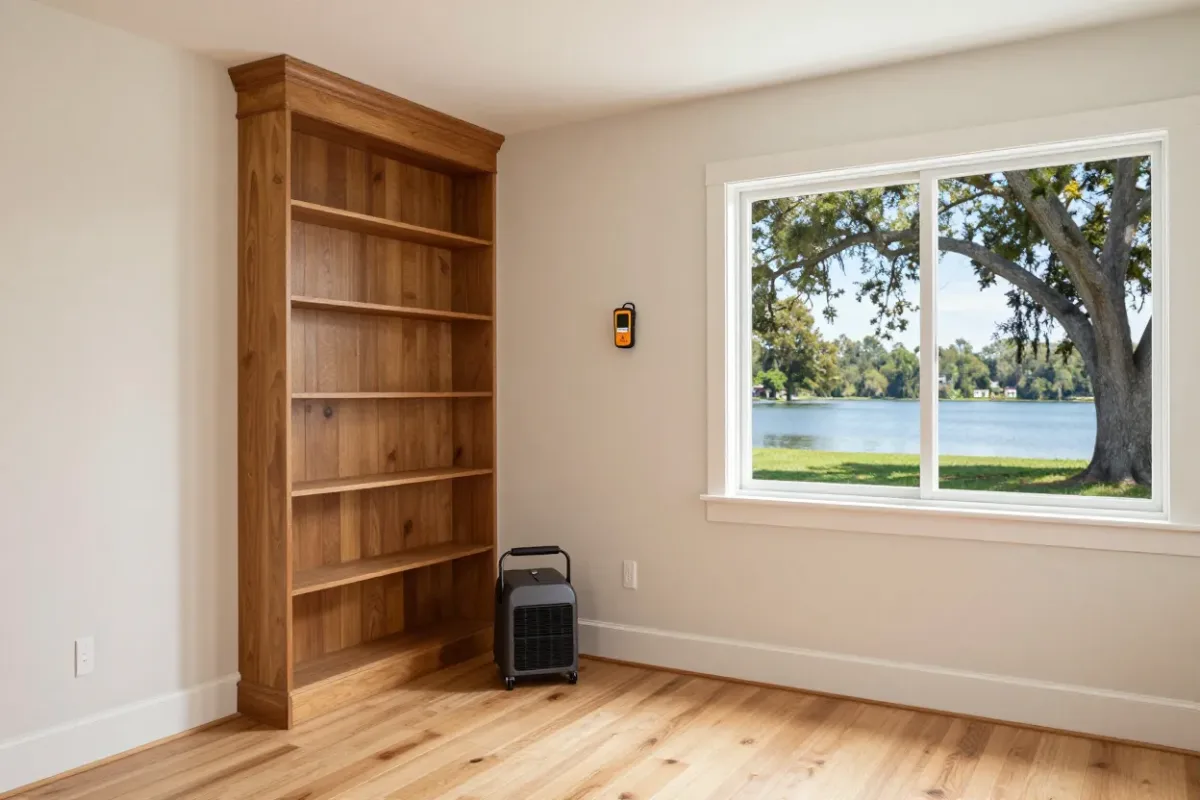
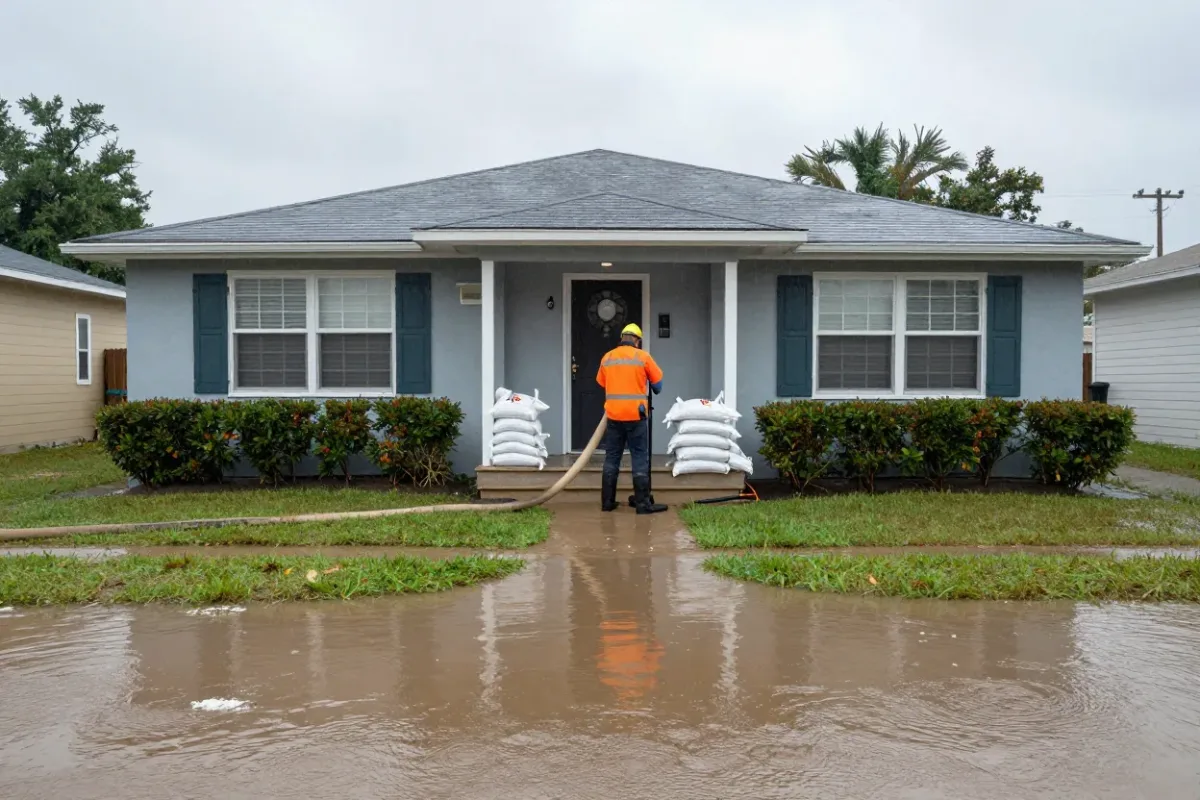
Lakeland takes its name honestly. Dozens of named lakes sit inside the city, including Lake Parker, Lake Hollingsworth, Lake Morton and Lake Mirror, several of them anchoring the historic neighborhoods that surround downtown and the Florida Southern College campus. The city sits on gently rolling ground in the Central Florida Highlands, midway between Tampa and Orlando along Interstate 4, with no coast and no surge. Its water damage comes instead from extreme rain overwhelming the lakes and the stormwater system, from water mains and plumbing, and from the sinkholes documented in the area.
Water Damage Florida provides water damage restoration in Lakeland 24 hours a day, from a soaked bedroom in a subdivision on the north side to a lakefront home that took weeks of standing water. Call (888) 435-4769 and we will tell you what to do first while a crew heads out.
Emergency Water Damage Response in Lakeland
The emergency calls we take in Lakeland cluster around three sources. Storms: heavy rain that lifts a lake into a yard, backs up a street drain, or drives through a damaged roof. Infrastructure: water main breaks that flood driveways and garages and, after Hurricane Milton, forced boil-water notices across the city. And the ordinary failures inside homes, which in the 1920s districts around Lake Morton and Florida Southern often involve original plumbing, plaster and hardwood, and in the newer subdivisions involve water heaters, supply lines and air handlers.
We respond with pumps, extractors and drying equipment and begin on the first visit. For lake flooding we plan for water that stays high, treating everything it touched as contaminated and checking daily for moisture returning at the slab. For older homes we meter before we cut, because original floors and plaster are worth saving. Photographs and moisture readings are logged before equipment goes in so your insurance file starts with an accurate record. Our emergency water damage page has more on the first visit.
Restoration for Historic Districts and New Subdivisions
Lakeland's housing splits along age. The Lake Morton Historic District and the Florida Southern Architectural District hold 1920s-era homes, many wood-framed with plaster, hardwood and pier foundations. Those can often be dried in place if we start early, with crawlspaces dried from below and only failed material removed. The city's newer housing on the north and south sides is block-and-stucco on slab with drywall and tile or plank flooring, which dries well once the lower wall and the flooring are opened to air.
Drying is monitored, not assumed. We run dehumidifiers and air movers in the closed home, meter each material daily, and continue until the readings meet the dry standard. Cleaning and antimicrobial treatment come first when the water was lake or street water, and repair begins only after the structure is verified dry. See our water damage restoration service page for the standards we work to.
Flood Cleanup After Lakeland's Lakes Overflow
Hurricane Milton in 2024 showed what Lakeland's lakes can do. Roughly a foot of rain fell in a day, an event the National Weather Service called a one-in-a-thousand-year rainfall for the area. Lake Parker, Lake Bonny, Lake Gibson and Lake Mirror all reached flood stage, homes around Lake Bonny were flooded for weeks, and water main breaks forced boil-water notices. The Peace and Hillsborough river basins that drain the city were already high from earlier storms. Before that, Hurricane Ian in 2022 brought isolated wind damage and Hurricane Irma in 2017 toppled trees and flooded some parking areas. Sinkholes are part of the picture too; Scott Lake partly drained through one in 2006.
Lake and street water is treated as contaminated. Flood cleanup removes the standing water, then the carpet, pad, lower drywall, insulation and cabinet bases the water soaked, cleans and disinfects the slab and hard surfaces, and runs air filtration while drying proceeds. When a lake stays high for weeks, as Lake Bonny did, we keep checking for water returning at the slab and adjust the drying plan. Our flood restoration page and the hurricane water damage recovery guide cover the rest of the process.
Repairing Bungalows and Slab Homes After Water Damage
In the historic districts, repair means patching plaster rather than replacing whole walls, replacing individual hardwood boards, matching trim and window casing, and repainting to blend with original finishes. In newer homes the work is standard: drywall, baseboard, tile or plank, cabinet bases and paint. Lake-flooded homes on slab often also need garage drywall, exterior door thresholds and lanai finishes replaced, and pier homes need subfloor, insulation and vapor barrier beneath the floor.
The repair scope follows the moisture map and photographs from mitigation, so what we rebuild matches what was wet. That record goes to you and your adjuster. When many homes on a street were hit by the same storm, we keep each file separate and complete so your claim stands on its own.
Mold Removal After Lake Water and Leaks
Weeks of standing lake water and a humid climate give mold every advantage in Lakeland. We look first at the lower walls of any room that faced floodwater, crawlspaces and the underside of hardwood in the older districts, the back of plaster after a roof leak, and in newer homes the water heater closet, cabinet backs and the wall behind the lanai slider. A slab leak that ran unnoticed produces the same result along an interior wall.
Our mold cleanup starts by correcting the moisture source, then contains the area with sheeting and negative air, removes and bags growing porous materials, HEPA-vacuums and cleans what remains, and dries the cavity before it is closed. We do not spray over growth. Read our mold remediation page for the method, and our note on hidden mold after water damage if your home was cleaned up after Milton but the walls were never opened.
What Causes Water Damage in a City of Lakes
The calls we take here reflect a lake-filled inland city with a large stock of 1920s homes, growing subdivisions, and a stormwater system that extreme rain can overwhelm. The frequent sources:
- Lake Parker, Lake Bonny, Lake Gibson, Lake Mirror and other lakes rising into yards and homes after extreme rain
- Street drains and retention areas backing up when the stormwater system is overwhelmed
- Water main breaks flooding driveways, garages and low rooms
- Original plumbing and cast-iron drains failing in Lake Morton and Florida Southern district homes
- Water heaters, supply lines and air handler condensate lines failing in newer subdivision homes
- Wind-driven roof and flashing damage during tropical systems
- Crawlspace moisture and seepage in pier-foundation homes after prolonged wet weather
- Ground movement and sinkhole activity over the area's limestone after heavy rain
Our Eight-Step Restoration Method
A flooded lakefront home and a leaking water heater get the same disciplined sequence. Here is how a Lakeland job runs from the first reading to the last.
- Inspect and mapWe confirm the source is stopped, classify the water, and meter floors, walls, ceilings and crawlspaces to find the full wet footprint.
- ExtractPumps and extraction equipment remove standing water from floors, garages, lanais and crawlspaces.
- Remove ruined materialsSoaked pad, contaminated drywall, wet insulation, failed plaster and subfloor sections are cut out and bagged; sound original material stays.
- Dry and dehumidifyDehumidifiers and air movers run in the closed home, including under raised floors, with readings logged daily until each material reaches its dry standard.
- Clean and treatSurfaces that contacted lake or street water are cleaned and treated with an antimicrobial, and air scrubbers run throughout.
- DocumentPhotographs, moisture logs and a written scope are compiled for you and your insurance carrier.
- RepairPlaster, drywall, flooring, subfloor, trim, cabinetry and paint are restored to match the home.
- VerifyA closing set of moisture readings and a walkthrough with you confirm the home is dry and the work complete.
Lakeland Neighborhoods We Serve
Our crews cover the whole city, from the historic streets around Lake Morton and the Florida Southern campus to downtown and the subdivisions on the north and south sides, and out to the lakefront areas near Lake Parker, Lake Gibson and Scott Lake.
Lakeland Neighborhoods
- Lake Morton Historic District
- Florida Southern Architectural District
- Moorehead
- Camphor Heights
- Orangewood
- Paul A. Diggs
- Webster Park South
- Lakeshore
- Lime Street
- Downtown Lakeland
Nearby Communities
Polk County's other cities and the communities toward Tampa share Lakeland's storms, and our crews serve them as well. Several have their own local pages:
Steps to Take Before We Arrive
A few safe actions in the first hour limit the damage and protect your claim.
- Close the source if it is insideShut the fixture valve or the main, usually at the front hose bib or the meter box near the street. If a water main break is the cause, the city handles the street; you handle the house.
- Stay out of water near electricityIf outlets, cords or the panel are in or near the water, do not go in. Turn off breakers only from a dry panel you can reach without stepping in water.
- Treat lake and street water as contaminatedDo not wade through it or clean it by hand. Keep children and pets away until the crew has removed it.
- Raise what you canMove rugs, electronics and light furniture to a dry room and set foil or plastic under heavy furniture legs.
- Photograph the sceneCapture the source, the water line and each affected room, plus the yard and street if the water came from outside.
- Keep the air conditioning onCool, dry air slows microbial growth. Keep windows shut even if the house smells damp.
- Call Water Damage FloridaDial (888) 435-4769 and tell us the source, how long the water has been there, and whether it is still rising outside.
If the lake is still coming up, our first 24 hours after a flood guide covers the additional steps.
Lakeland Water Damage FAQs
Our home near Lake Bonny was flooded for weeks after Milton. Can it be restored?
In most cases, yes, though a lot of material comes out. Prolonged contaminated water ruins drywall, insulation, carpet, pad and cabinet bases, so those are removed, the slab or floor system is cleaned and disinfected, and the home is dried with monitored equipment before rebuilding. The sooner drying starts after the water recedes, the more of the structure is saved.
A water main broke and flooded our garage and a bedroom. Is that handled like a storm flood?
Water from a main is cleaner than lake water, but once it crosses a driveway and enters through a garage it has picked up contaminants, so we treat it as gray water: extract, remove what it soaked, clean and dry. We document the source and the path for your claim.
Can the hardwood floors in our Lake Morton bungalow be saved after a leak?
Often, if drying starts early. We meter the boards and subfloor, dry from above and from the crawlspace if needed, and let the wood come back slowly. Boards that have buckled or split are replaced individually rather than refinishing the whole floor.
We had a boil-water notice after the storm. Does that affect the cleanup?
It does not change the restoration work, but we avoid using tap water for cleaning during a notice and bring what we need. Once the notice lifts, normal cleaning resumes.
Should we be concerned about sinkholes after weeks of wet ground?
Sinkholes are documented in the area, and saturated ground is a known trigger. Evaluating ground stability is outside our scope. If you notice new cracks, a depression in the yard or doors that suddenly stick, keep clear and contact your insurer and a qualified engineer; we will handle the water inside the home.
How long will the equipment stay?
A small clean-water loss caught early typically dries within a few days. A lake-flooded home, a crawlspace or a slab that sat wet takes longer. We monitor daily and remove equipment when the readings show the materials are dry.