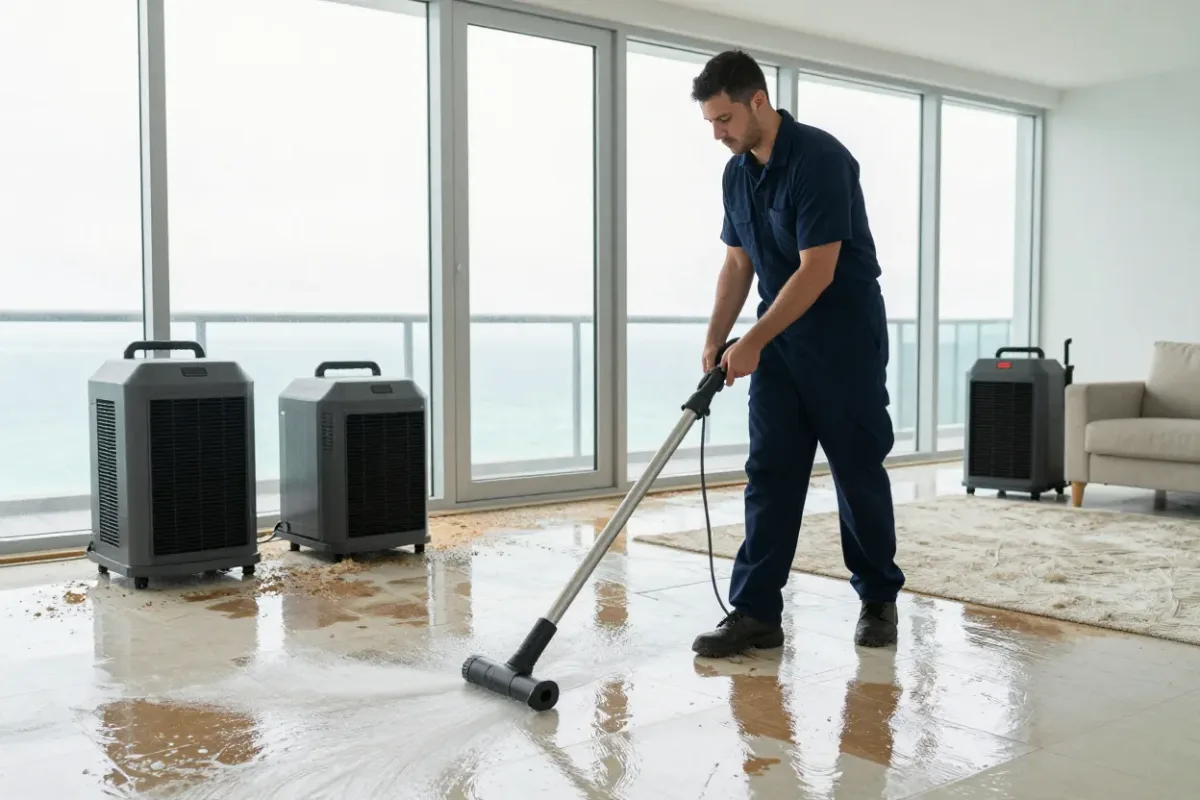
Miami sits on a flat limestone plain only a few feet above Biscayne Bay, with a water table so close to the surface that basements are practically unheard of and slab floors sit right on top of the Biscayne Aquifer. That geography is why a small leak becomes a large problem so quickly here: water has nowhere to drain, humidity slows evaporation, and warm temperatures give microbial growth a head start. Water Damage Florida provides 24/7 water damage restoration in Miami, from emergency extraction in a high-rise unit to full structural drying and rebuild in a single-family home.
We work across the City of Miami, including Brickell, Downtown, Coconut Grove, Little Havana, Wynwood, Edgewater, the Upper Eastside and the neighborhoods west toward Flagami, and we coordinate with condo associations and property managers when a loss affects more than one unit. Call (888) 435-4769 any hour and describe what you are seeing; we will tell you what to do right now and get a crew moving.
Emergency Water Damage Response in Miami
Emergency water damage calls in Miami tend to come from three directions: plumbing failures inside condo towers, where a supply line or water heater on one floor sends water through ceilings and elevator shafts below; roof and window intrusion during tropical downpours; and bay or canal water entering ground-floor garages and lobbies along the waterfront during king tides and storm surge. Each needs the same first steps performed quickly: stop the source, remove standing water, and get air moving before materials wick moisture upward.
Our emergency crews arrive with truck-mounted and portable extractors, submersible pumps for garages and elevator pits, and enough air movers and dehumidifiers to begin drying the same visit. In multi-story buildings we trace water through the stack rather than treating only the unit that called, because the wet drywall two floors down is usually the one that grows mold first. Documentation of moisture readings and photos begins on arrival so your insurance claim starts with a clear record.
Water Damage Restoration for Miami Homes and Condos
Restoration is the full path from wet emergency to finished, dry living space. After extraction we map every wet material with moisture meters and thermal imaging, then decide what can dry in place and what has to come out. In Miami's concrete-block and poured-concrete construction, the structure itself usually survives; the vulnerable materials are drywall, baseboards, laminate and engineered wood flooring, cabinetry toe-kicks and the insulation behind finished walls.
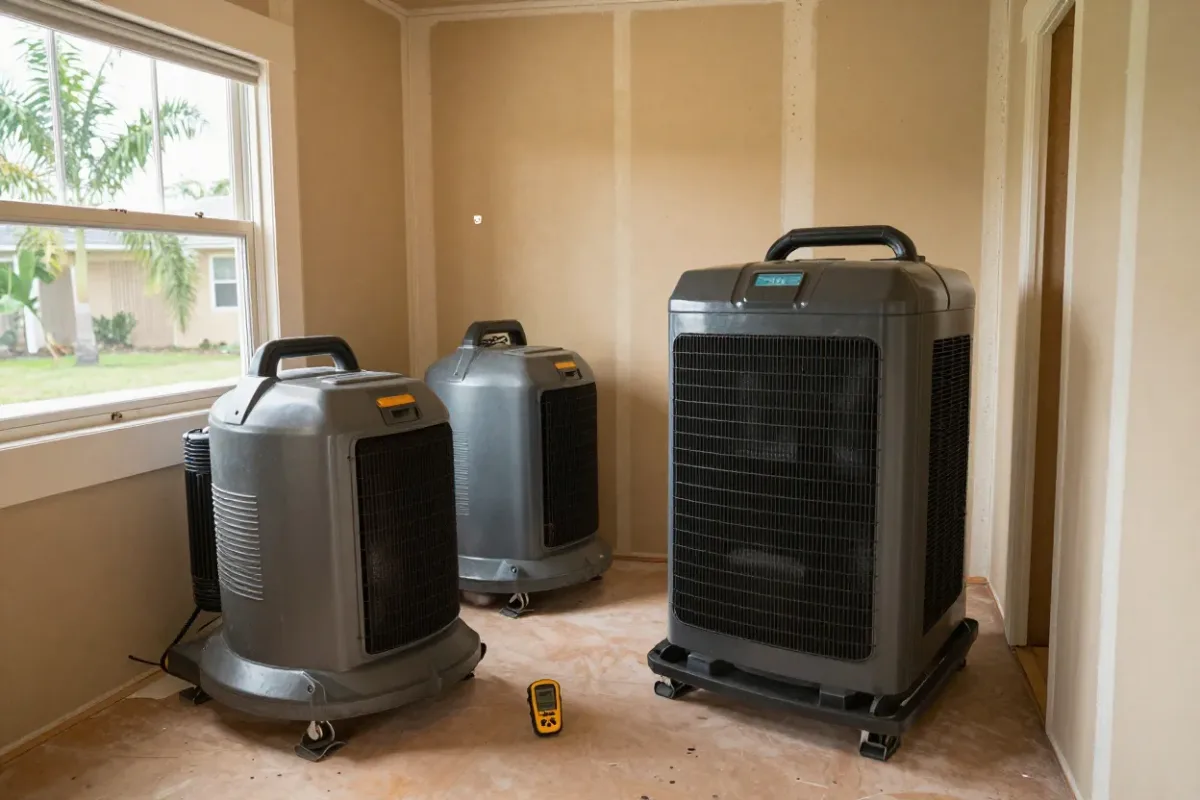
Drying in South Florida's humidity is an engineering task, not a matter of opening windows. Outdoor dew points sit high for most of the year, so we dry with the building closed up, using low-grain refrigerant dehumidifiers sized to the space and monitored daily until readings return to the dry standard for that material. Only then do we move to cleaning, antimicrobial application where the water category calls for it, and the rebuild of drywall, trim, paint and flooring.
Flood Cleanup in Miami After Storms and King Tides
Flooding in Miami is not limited to hurricanes. Seasonal king tides push bay water up through storm drains and into low streets in Brickell, Edgewater and along the Miami River, and intense summer rain events, like the June 2024 storms that shut down parts of the metro rail corridor, overwhelm drainage across the city. When Hurricane Irma passed in 2017, surge along the Biscayne Bay shoreline reached a block or two inland, with the deepest water surveyed in pockets of Brickell and Coconut Grove.
Bay, canal and street water is treated as contaminated. Flood cleanup therefore means removing saturated porous materials rather than trying to dry them, cleaning and disinfecting hard surfaces, and running air filtration while the space dries. Ground-floor garages, storage rooms, lobbies and first-floor units get the most attention because that is where salt water and silt settle. If you have flood water in your home or building now, keep people and pets out of it and call us; we can talk you through shutting off power safely if the panel is reachable without stepping in water.
Water Damage Repair in Miami
Once the structure is verified dry, repair returns rooms to use. Typical Miami repair work includes replacing cut drywall and baseboards, rehanging cabinets, reinstalling or replacing flooring that failed, repainting, and addressing the ceilings below a plumbing loss in a condo. In older homes in Shenandoah, Coral Way and Little Havana we frequently work around original terrazzo and Dade County pine, which are worth saving and usually can be when drying starts early.
We coordinate repair scope with your adjuster using the moisture logs and photos gathered during mitigation, so there is a clear line between what water damaged and what was pre-existing. Condo work also means respecting building rules on hours, elevator use and protection of common areas; we plan for that so the project does not stall on association approvals.
Mold Removal and Cleanup in Miami
Miami's year-round warmth and humidity mean that any water left in a wall cavity or under flooring can support visible mold growth within days. Common trouble spots are the drywall behind bathroom tile, the back of kitchen base cabinets after a dishwasher leak, closets that share a wall with an air handler, and the lowest course of drywall in ground-floor units after tidal or storm water intrusion.
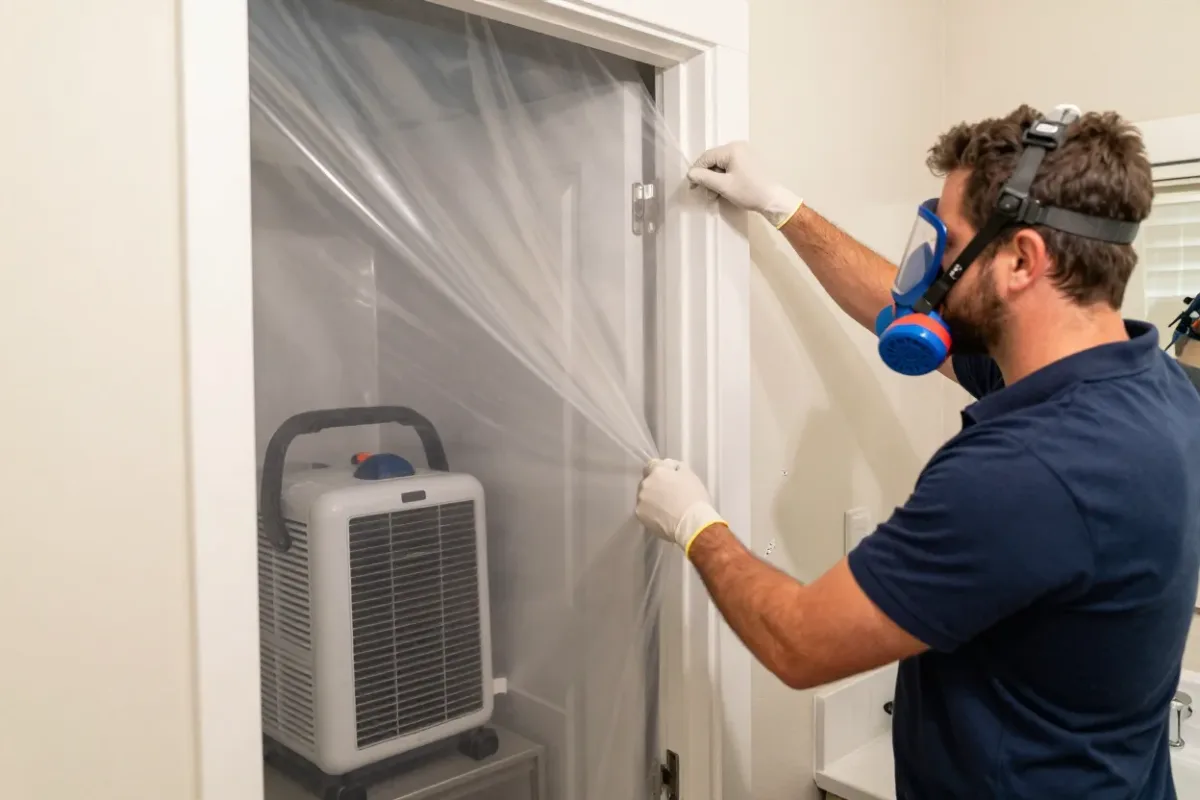
Our mold cleanup follows the same discipline as our water work: find and correct the moisture source, contain the affected area with plastic sheeting and negative air, remove and bag contaminated porous materials, HEPA-vacuum and clean remaining surfaces, and dry the space fully before rebuilding. We do not spray over growth and call it finished. Learn more about our statewide approach on our mold remediation page, and read where hidden mold usually forms after water damage before repainting a wall that was ever wet.
Common Causes of Water Damage in Miami
The mix of water damage calls we see in Miami reflects the city's construction and climate: a large stock of high-rise and mid-rise condos where one failure affects many units, a shoreline exposed to the bay, and a wet season that runs from late spring through fall with hurricane exposure peaking from mid-August through September. The most frequent sources include:
- Supply line, water heater and washing machine hose failures in condo towers, sending water into units below
- Air conditioning condensate line clogs and drain pan overflows, which run almost continuously in Miami's cooling season
- Roof, flashing and window leaks during tropical downpours and named storms
- Storm surge and king tide flooding in low-lying bayfront areas and ground-floor garages
- Sewer and storm drain backups when heavy rain overwhelms the city system
- Slab and pipe leaks in older single-family homes built on the Miami limestone
- Sliding glass door and balcony drainage failures in wind-driven rain
- Interior humidity damage when air conditioning fails while a home sits closed up
Our Water Damage Restoration Process in Miami
Every Miami job follows the same measured sequence. The order matters because skipping the verification steps is how a rebuilt wall ends up wet again.
- Inspection and moisture mappingWe identify the source, classify the water, and map wet materials with meters and thermal imaging, including units and floors adjacent to the visible damage.
- Water extractionStanding water is removed with truck-mounted or portable extraction equipment; submersible pumps handle garages, elevator pits and flooded ground floors.
- Controlled demolition where neededSaturated drywall, baseboards, wet insulation and flooring that cannot be dried are removed and bagged so the structure behind can dry.
- Structural drying and dehumidificationAir movers and low-grain dehumidifiers run continuously inside a closed building, with daily readings logged until materials reach their dry standard.
- Cleaning and sanitizingSurfaces touched by contaminated water are cleaned and treated, and HEPA air filtration runs during the work.
- Damage assessment and documentationPhotos, moisture logs and a written scope are compiled for your records and your insurance carrier.
- Repair and restorationDrywall, trim, cabinetry, flooring and paint are restored so the space matches the rest of the home.
- Final inspectionA final moisture check and walkthrough confirm the work is complete and the space is ready to use.
Miami Areas We Serve
We respond throughout the City of Miami and the surrounding Miami-Dade communities. Our crews are familiar with the differences between a waterfront tower in Brickell, a 1920s bungalow in Coconut Grove, and a concrete-block ranch home in Flagami, and they bring equipment suited to each.
Miami Neighborhoods
- Brickell
- Downtown Miami
- Coconut Grove
- Little Havana
- Wynwood
- Edgewater
- Midtown
- Design District
- Little Haiti
- Allapattah
- Coral Way
- Shenandoah
- Flagami
- Upper Eastside
- Liberty City
Nearby Communities
Water damage rarely respects city limits, and our Miami crews also cover the neighboring municipalities. Several have their own service pages with local detail:
What to Do Right Now if You Have Water Damage in Miami
The first hour matters more than any other. These steps are safe for most homeowners and condo residents and will limit the damage before our crew arrives.
- Stop the water if you can do so safelyClose the fixture shutoff or the main valve. In a condo, notify the building engineer or management immediately so the riser can be isolated if needed.
- Stay out of standing water near electricityDo not enter a flooded room if outlets, cords or the electrical panel may be in contact with water. If the breaker panel is dry and reachable, you can switch off power to the affected area.
- Treat bay, canal or street water as contaminatedKeep children and pets out, avoid skin contact, and do not attempt to clean it yourself.
- Move what you canLift rugs, furniture legs and electronics off wet floors, and slide foil or plastic under furniture that must stay in place.
- Photograph everythingTake pictures and short video of the source, the water level and every affected room before anything is moved or removed.
- Keep the air conditioning runningIn Miami, cool dry air from the AC slows mold growth while you wait; do not open windows to humid outdoor air.
- Call for helpReach Water Damage Florida at (888) 435-4769 and tell us the source, how long it has been wet, and whether other units or floors are affected.
For a fuller storm plan, read our first 24 hours after a flood guide and the hurricane water damage recovery guide.
Miami Water Damage FAQs
Do you handle water damage in Miami condos and high-rise buildings?
Yes. A large share of our Miami work is in multi-unit buildings. We coordinate with management and the building engineer, trace water through the affected stack, protect common areas and elevators, and document each unit separately so individual owners and the association each have what they need for their claims.
Is water from Biscayne Bay or a king tide treated differently than a pipe leak?
It is. Salt water from the bay, canals or the street is contaminated and corrosive, so porous materials it touched are removed rather than dried, hard surfaces are cleaned and disinfected, and metal fixtures and electrical components it reached should be inspected. A clean supply-line leak allows far more material to be saved when we arrive quickly.
How fast does mold start after water damage in Miami?
In Miami's warm, humid conditions, growth on wet drywall or the back of cabinets can begin within a couple of days. That is why we start drying on the first visit and why keeping the air conditioning running while you wait for us matters.
My condo insurance and the association's policy both may apply. Who pays for what?
Coverage depends on the policies and the association documents, not on us. What we do is document the source, the path the water took, and the damage in each unit and common area, so the adjusters can sort out responsibility with a clear record. You remain in charge of your claim.
Can you dry a home without tearing out the walls?
Often, if the water was clean and we arrive early. Drywall and even some flooring can be dried in place with the right equipment when the moisture has not migrated far. Contaminated water, saturated insulation and long-wet materials generally have to come out. We tell you which applies after the moisture mapping.
Do you provide water damage service outside the City of Miami?
Yes. Our crews cover all of Miami-Dade County, including Miami Beach, Coral Gables, Hialeah, Doral, Kendall and the communities south toward Homestead, and we serve the rest of Florida through our statewide service areas.