Lauderhill is a compact, densely settled city just west of Fort Lauderdale, built out in the 1960s with prefabricated model homes and grown around the Inverrary golf community. It sits only a few feet above sea level on soils that drain poorly, and the city states that most of Lauderhill lies within a FEMA Special Flood Hazard Area. That combination shows up in the record: the great majority of the city's documented repetitive-loss properties trace back to storms such as Hurricane Wilma and Tropical Storm Gordon, and Tropical Storm Eta in November 2020 dropped roughly a foot of rain, flooding streets and parking lots, requiring water rescues, and leaving the worst standing water in the St. George and Broward Estates areas and on the city's east side.
Water Damage Florida provides flood cleanup and water damage restoration in Lauderhill for homes, condominiums and golf-course communities, with crews available 24 hours a day. We extract, dry, remove what cannot be saved, clean up mold and rebuild, and we keep the records your insurance carrier will ask for. Call (888) 435-4769 as soon as you find water.
Emergency Response When Water Is Rising
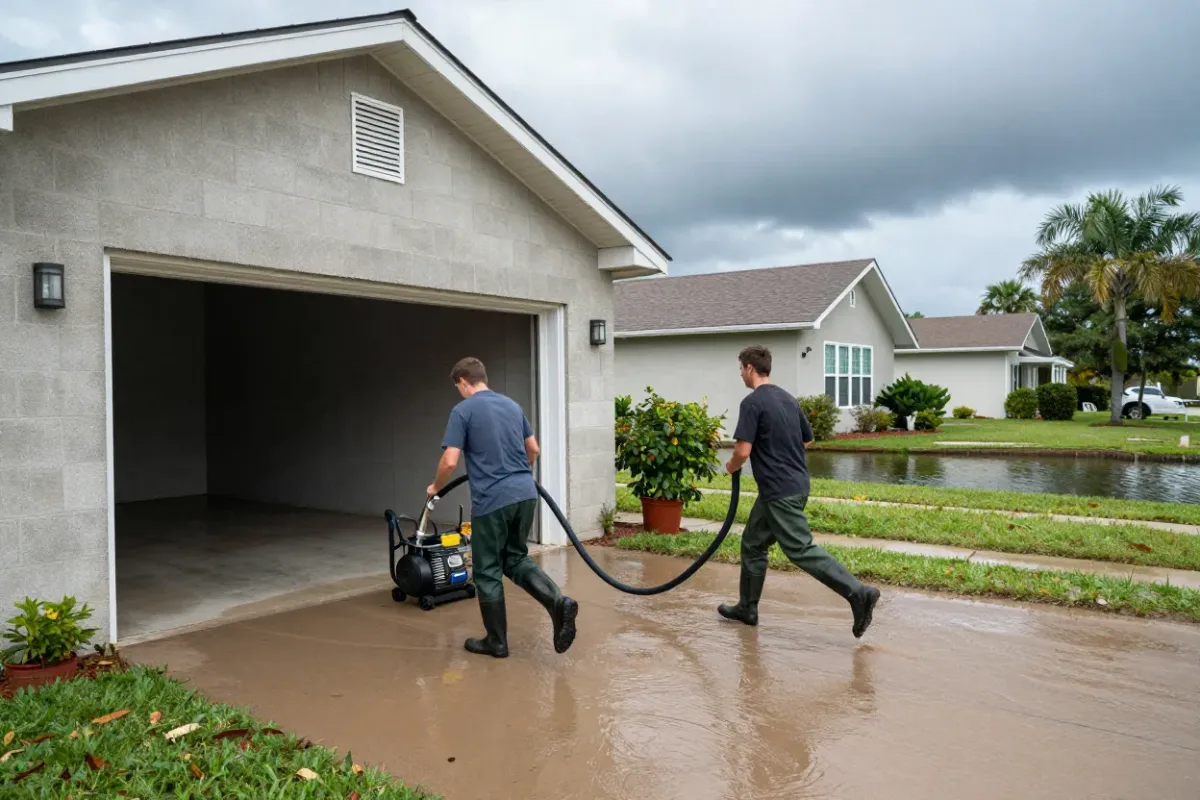
Two kinds of emergency calls come from Lauderhill. The first is plumbing: a supply line, water heater or washing machine in a 1960s home whose original fittings have reached the end of their life, or a leak inside an Inverrary condominium that is already dripping into the unit below. The second is rain. When a slow tropical system parks over central Broward, the canals behind homes rise, the poorly draining soil stops absorbing, and water comes across yards and driveways into garages and the lowest rooms.
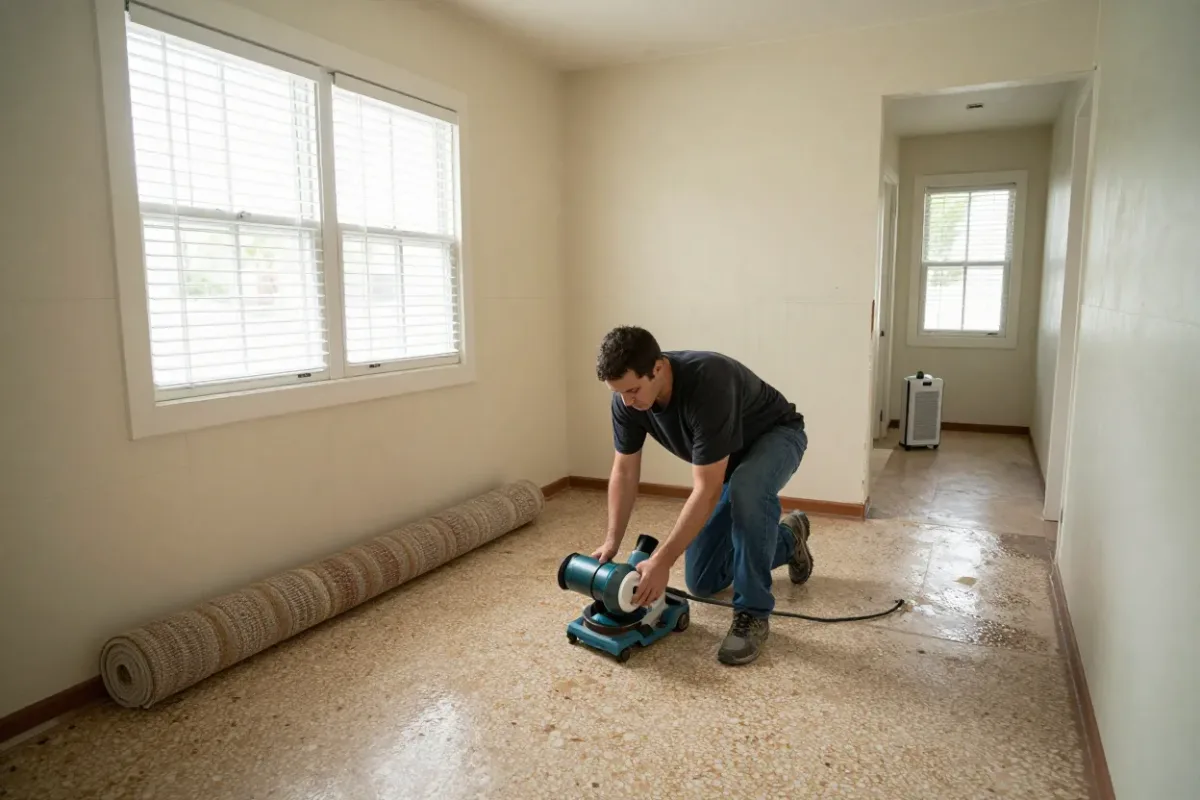
For either kind we arrive ready to extract, with portable and truck-mounted units for interiors and submersible pumps for garages and patios. Air movers and dehumidifiers are set on the first visit so drying does not wait for a second appointment. We photograph the source and the extent of the water and log starting moisture readings before anything is moved. Our emergency water damage page explains what those first hours involve.
Restoration for Lauderhill's Mid-Century Homes and Condos
Much of Lauderhill's housing dates from the 1960s and 1970s: single-story homes on slabs, many built from prefabricated designs sold as complete packages, alongside condominiums and the golf-course communities around Inverrary. Homes of that era commonly have terrazzo or tile under later flooring, original plumbing in the slab, and drywall or paneling over concrete block. Those details matter. Terrazzo generally survives a water loss well once the covering is removed; laminate and carpet over it usually do not.
Our restoration approach is the same regardless of the building: map every wet material with moisture meters and thermal imaging, remove what cannot dry, and dry the rest with the home closed up and dehumidifiers sized to the space. Readings are logged daily until each material reaches its dry standard, and only then do cleaning, treatment and repair begin. Our water damage restoration service page covers the full sequence.
Flood Cleanup in Lauderhill After Tropical Rain
Lauderhill's flooding comes from the sky, not the sea. The city is inland, but its low elevation, poorly draining soils and dense development mean that a foot of rain has nowhere to go. Tropical Storm Eta in 2020 was the clearest recent example, with streets and parking lots under water and the deepest standing water in St. George, Broward Estates and the east side of the city. Earlier storms, including Hurricane Wilma in 2005 and Tropical Storm Gordon in 1994, account for most of the city's documented repetitive-loss properties, which is why the city maintains a stormwater master plan and flood-warning system.
Rainwater that has crossed streets, yards and parking lots is contaminated, and so is water backing up from a canal. Flood cleanup therefore means removing saturated carpet, pad, the lower portion of drywall and wet insulation rather than attempting to dry them, then cleaning and disinfecting the hard surfaces that remain and filtering the air while the structure dries. If your street or neighborhood is affected, our flood restoration page and our guide to the first 24 hours after a flood will help you plan.
Putting Homes Back Together
Once the moisture readings say the structure is dry, repair returns the home to normal use. In Lauderhill that typically means replacing the cut section of drywall and the baseboard, reinstalling or replacing flooring, rehanging kitchen and bath cabinets pulled for drying, repainting, and in condominiums rebuilding the ceiling below an upper-unit leak. Where an older home has paneling rather than drywall, we discuss with you whether to match it or replace it with drywall.
Because the same crew handled mitigation, the repair scope is grounded in the photos and daily moisture logs already in your file, which makes it easier for your adjuster to separate storm damage from wear. In Inverrary and other association-governed communities we schedule around the rules on work hours and shared spaces and keep documentation separate for each unit.
Mold Removal After Water Damage in Lauderhill
Mold in Lauderhill homes tends to appear in the places rainwater reached and no one dried: the lowest course of drywall behind furniture, the back of a closet on an exterior wall that faces the canal, the underside of carpet pad in a room that was mopped but not extracted, and the cabinet base beneath a kitchen sink that dripped for months. Homes that flooded more than once, which the city's repetitive-loss record shows are not rare here, are the ones where we most often find older growth behind newer paint.
Mold removal starts with correcting the moisture source, then containing the area with plastic sheeting and negative air, removing and bagging affected porous materials, HEPA-vacuuming and cleaning what remains, and drying the space fully before rebuilding. We never paint over growth. Our mold remediation page explains the process, and our article on hidden mold after water damage describes where it forms.
What Causes Water Damage in Lauderhill Homes
A low, flat city of aging homes, dense condominiums and canal-backed lots produces a recognizable pattern of water losses. The sources we see most often in Lauderhill are:
- Heavy tropical rain overwhelming poorly draining soils and flooding low streets, yards and garages
- Canals behind homes rising into backyards, patios and rear rooms during prolonged storms
- Original supply lines and water heaters in 1960s and 1970s homes failing with age
- Condominium leaks in Inverrary and other multi-unit communities spreading to the units below
- Slab leaks where original piping runs beneath terrazzo and tile floors
- Air conditioning condensate overflows in interior closets during the cooling season
- Roof, soffit and window leaks in wind-driven rain
- Sewer and storm drain backups when the drainage system is full
Our Restoration Sequence
Each Lauderhill job follows eight stages in a fixed order. We verify each one before moving on, because the order is what prevents a rebuilt wall from being wet again next summer.
- Inspection and moisture mappingWe confirm the source, classify the water as clean or contaminated, and use meters and thermal imaging to find every wet material, including behind paneling and under older flooring.
- ExtractionStanding water is pulled from carpet, terrazzo and tile with portable or truck-mounted extractors; submersible pumps clear garages and patios after a storm.
- Removal of unsalvageable materialsRain-soaked carpet and pad, the lower section of wet drywall or paneling, and saturated insulation are cut out and bagged.
- Drying and dehumidificationAir movers and dehumidifiers run continuously with the home closed up, and readings are logged each day until materials reach their dry standard.
- Cleaning and treatmentSurfaces that contacted floodwater or canal water are cleaned and disinfected, with HEPA filtration running during the work.
- DocumentationPhotos, moisture logs, an equipment record and a written scope are assembled for your insurance claim.
- RepairDrywall, baseboard, flooring, cabinets and paint are restored, with condominium requirements handled where they apply.
- Final checkA closing round of moisture readings and a walkthrough with you confirm the home is dry and complete.
Lauderhill Areas We Serve
We cover the whole city, from the golf-course community of Inverrary to the residential streets of Broward Estates and St. George and the east side near Fort Lauderdale. Our crews know that a canal-backed ranch home and an upper-floor condominium call for different equipment and bring both.
Lauderhill Neighborhoods
- Inverrary
- Broward Estates
- St. George
- Boulevard Forest
- Boulevard Woods North
- Central Lauderhill
- Castle Gardens
Nearby Communities
Lauderhill shares its borders and its weather with several neighboring cities, and our crews serve all of them. These communities have their own service pages:
What to Do While You Wait for Us
Whether the water came from a pipe or a storm, a few safe steps in the first hour reduce what has to be replaced. Skip any step that puts you at risk.
- Cut off the source if it is plumbingClose the fixture valve or the main shutoff. In a condominium, notify management so the riser can be isolated.
- Stay out of water that may be energizedDo not enter a flooded garage or room where outlets, appliances or the electrical panel might be in the water. Switch off a breaker only if the panel is dry and reachable without wading.
- Treat floodwater as contaminatedWater that came across the street, the yard or from a canal carries whatever it picked up on the way. Keep children and pets out and do not try to clean it yourself.
- Move what is movableLift rugs, furniture and stored items off wet floors, and slide foil or plastic under heavy pieces that must stay.
- Take photos before cleanupCapture the source, the waterline and every affected room on your phone before anything is thrown away.
- Keep the home cool and closedLeave the air conditioning running and windows shut; cool, dry air slows microbial growth while you wait.
- Call (888) 435-4769Tell us where the water came from, how long it has been there and whether other units or neighbors are affected.
Lauderhill Water Damage FAQs
Our house flooded during Eta and again in a later storm. Does repeat flooding change the cleanup?
It changes what we look for. A home that has flooded before often has older moisture damage or growth behind finishes that were repaired on the surface. We inspect the full wall cavity and under the flooring rather than only the area that got wet this time, and we document pre-existing conditions separately from the new loss.
Can the terrazzo floor in my 1960s home be saved?
Usually. Terrazzo is a hard, non-porous surface that tolerates water well once whatever was laid over it is removed and the slab is dried. The carpet, laminate or vinyl on top is generally what has to go.
Why does the city say most of Lauderhill is in a flood hazard area if we are so far from the ocean?
Elevation and soil. The city sits only a few feet above sea level, its soils drain poorly, and its canal network fills quickly in heavy rain. The FEMA Special Flood Hazard Area designation reflects rainfall flooding, not surge, and storms such as Wilma, Gordon and Eta have shown how much water can stand in the streets.
Do you handle condominium water damage in Inverrary?
Yes. We coordinate with the association and management, trace the water through neighboring units, protect hallways and shared spaces, and document each unit separately so owners and the association each have their own record.
My backyard ends at a canal. Should I expect problems every wet season?
Not necessarily, but rear rooms and patios on canal lots are the first to take water when the canal rises. If you see water reaching the patio or the rear wall, photograph it and call us early, since a wall that is checked and dried promptly is far less work than one discovered wet weeks later.
How is the work documented for insurance?
We provide photos of the source and each affected area, daily moisture readings, an equipment log and a written scope of work. You share it with your carrier as you see fit; the claim remains yours.