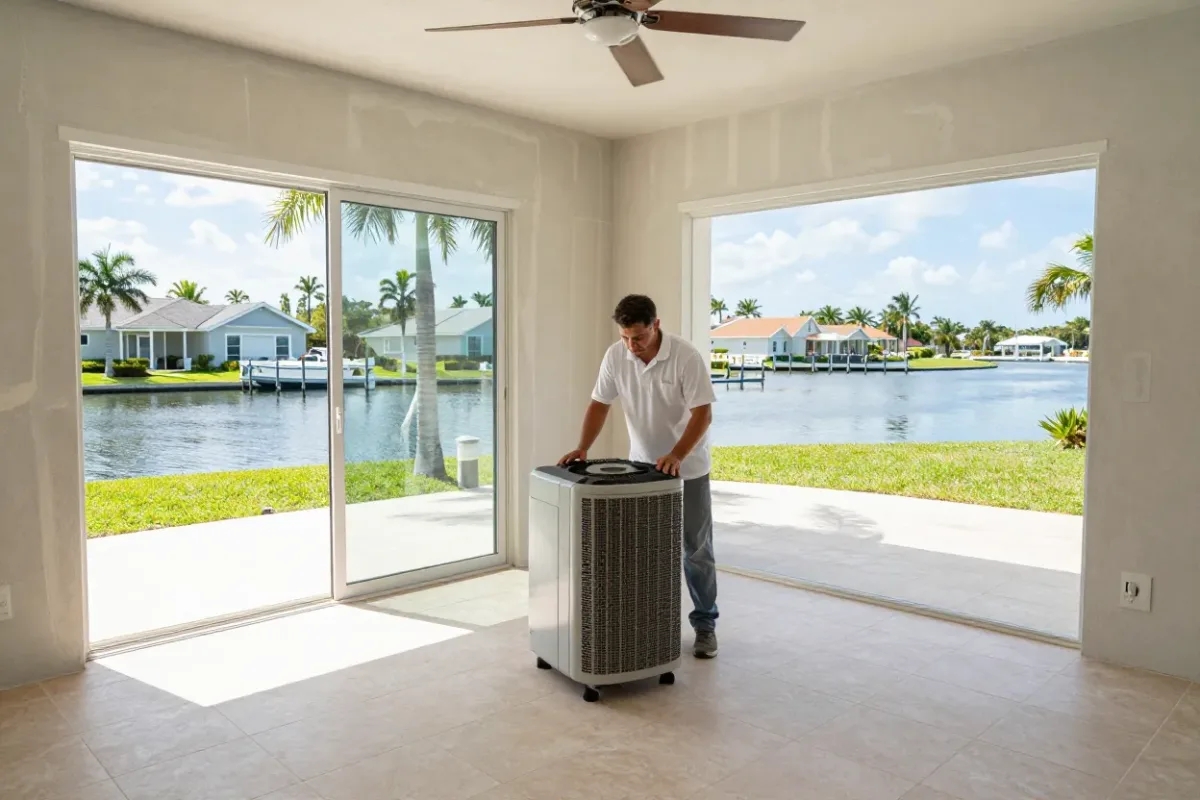
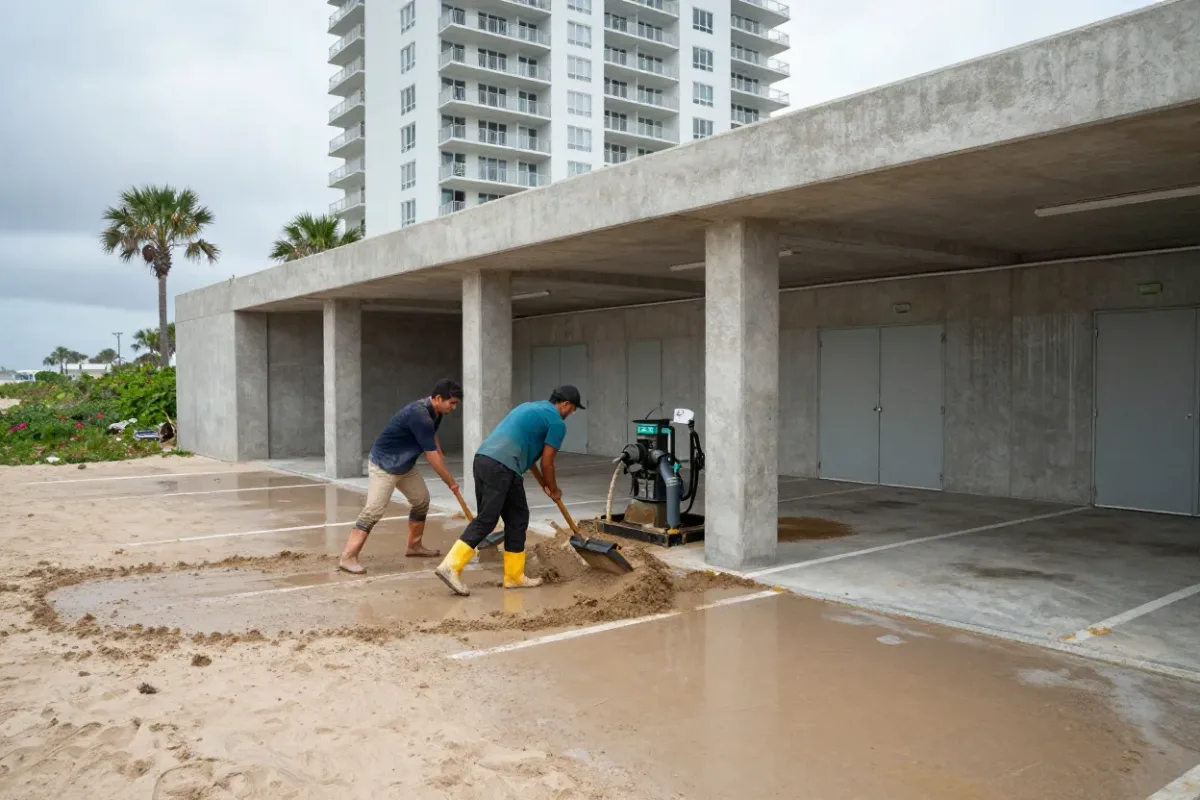
Marco Island is a barrier island at the northern end of the Ten Thousand Islands, ringed by the Gulf, bays and mangrove islands, with roughly half its area under water. The developed island is a resort and retirement community of canal-front homes and beachfront condo towers, plus a few areas of unusually high ground for South Florida, and more than half of its housing units are seasonal or vacant. Every property is close to salt water and the air is humid year-round, which means water damage here comes from two directions at once: the storms that hit the island directly, and the everyday leaks that go unnoticed in closed homes and corrode-prone plumbing.
Water Damage Florida provides 24/7 water damage restoration on Marco Island, including emergency water extraction, storm surge and flood cleanup, structural drying, mold removal and repair for single-family homes and condominiums. Call (888) 435-4769 any hour and we will get a crew moving toward the island.
Emergency Water Damage Help on the Island
A typical urgent call from Marco Island is a caretaker or neighbor reporting water under the door of a closed seasonal home, a condo manager with a failed water heater on an upper floor, or a returning owner who found a ceiling stain that has spread into the closets. Salt air shortens the life of fittings and valves, so supply lines and connections fail more often here than inland. During a storm, surge enters garages, ground-floor storage and the lowest rooms of canal-front homes, and wind drives rain past balcony doors in the towers.
We respond with extraction gear, pumps, air movers and dehumidifiers so that drying begins on the first visit, and we document the source and moisture readings from arrival. Because the island sits at the end of a long drive from the mainland, we plan each trip to bring everything the job needs. Our emergency water damage page has more on how the first response works.
Restoring Canal-Front Homes and Beachfront Condos
Canal-front homes on Marco Island are mostly single-story block construction with tile floors and open living areas that let water spread across the slab and under cabinetry. Beachfront condos add shared assemblies, where a leak in one unit shows up as a stained ceiling two floors down, and building rules that govern hours and elevator use. In both, the materials that suffer are drywall, baseboards, cabinet bases, closet shelving, wood or laminate flooring and insulation.
After extraction we survey moisture with meters and thermal imaging, including adjacent units in a tower, remove what cannot be dried, and set up closed-space drying with dehumidifiers matched to the volume. Readings are logged daily and repair waits until each material reaches its dry standard. Our water damage restoration service page explains the full scope.
Flood Cleanup After Surge on Marco Island
Few places in Florida have been hit as squarely as this island. Hurricane Irma made its final Florida landfall on Marco Island in 2017 as a Category 3 storm, with the highest sustained winds of the storm measured here and several feet of surge. Hurricane Ian in 2022 devastated the island with an estimated eight-foot storm surge. Hurricane Wilma came ashore just to the south at Cape Romano in 2005, and Hurricane Milton sent several feet of surge along the Collier coast in 2024. Canal-front homes and the ground floors of beachfront buildings take the water first.
Surge is salt water carrying sand, silt and debris, and it corrodes what it touches. Flood cleanup means pumping and extracting, removing porous materials the water reached rather than drying them, cleaning and disinfecting hard surfaces, inspecting metal, appliances and electrical components exposed to salt, and drying the structure under air filtration. Stay out of standing water until power is confirmed off and see our flood restoration page for what happens next.
Repair After the Structure Is Verified Dry
Once the moisture logs confirm dryness, repair returns the home to use. On Marco Island that commonly includes new lower drywall and baseboards, replacement of swollen cabinet bases and vanities, new flooring where plank or laminate failed, ceiling repairs in condo units below a leak, and paint. Salt-exposed hardware and fixtures are often replaced at the same time.
We build the repair scope from the photos and readings gathered during mitigation, so your adjuster sees what the water affected and where. With so many owners away for part of the year, we are used to scheduling around travel, sending progress photos, and keeping the home secured and climate-controlled between visits.
Mold Removal in Island Homes and Condos
Constant salt air and high humidity, combined with the many homes that stand closed for months, make mold a routine finding after water damage on Marco Island. We see it behind the drywall of ground-floor rooms that took surge, inside the walls around a leaking shower or tub, under wood or laminate flooring, in the back of kitchen cabinets after a line failure, around air handler closets, and across closed seasonal homes where a leak ran with the thermostat set high.
Our mold removal contains the area with plastic sheeting and negative air, removes and bags affected porous materials, HEPA-vacuums and cleans what remains, and dries the space completely before rebuilding, always after the moisture source is corrected. Details are on our mold remediation page, and our guide to hidden mold after water damage lists the spots to check in a home that has been closed up.
Why Water Damage Happens on Marco Island
An exposed barrier island of seasonal homes and condo towers, bathed in salt air, sees a distinctive set of water damage causes:
- Storm surge from the Gulf and canals into garages, ground floors and low rooms of canal-front homes
- Salt-air corrosion of supply fittings, valves and water heater connections leading to sudden failures
- Leaks in seasonal homes and condos that run unnoticed for weeks or months
- Water heater and supply line failures in upper-floor condo units spreading to units below
- Wind-driven rain past balcony doors and windows in beachfront towers during storms
- Air conditioning condensate overflows during the long cooling season
- Roof and flashing leaks that appear during ordinary rain after earlier storm damage
- Dishwasher, ice maker and washing machine hose failures
Our Restoration Sequence
Every Marco Island job moves through the same eight verified stages, whether the water came from the Gulf or a corroded fitting under a sink.
- Inspection and moisture mappingWe locate the source, determine whether the water is clean or salt-contaminated, and map moisture through floors, walls, cabinets and neighboring condo units with meters and thermal imaging.
- Water extractionPumps and extractors remove standing water from floors, garages and ground-level spaces, including sandy surge water.
- Removal of ruined materialsSaturated drywall, insulation, pad, flooring and swollen cabinetry are cut out and bagged so what remains can dry.
- Drying and dehumidificationAir movers and commercial dehumidifiers run in the closed space, with readings logged daily until each material reaches its dry standard.
- Cleaning and disinfectionSurfaces exposed to salt water or long-standing moisture are cleaned and treated, with HEPA air filtration running.
- DocumentationPhotos, moisture logs and a written scope are assembled for you, your carrier and, in a condo, the association.
- RepairDrywall, trim, cabinets, flooring, fixtures and paint are restored to match the home or unit.
- Final moisture checkA closing survey and walkthrough confirm the space is dry and finished.
Marco Island Areas We Serve
We respond to every part of the City of Marco Island, from the canal-front neighborhoods across the interior of the island to the beachfront towers along the Gulf and the higher ground near Key Marco.
Marco Island Neighborhoods
- Key Marco
- Tigertail Beach area
- South Beach area
Nearby Communities
Our Collier County crews also cover the communities on the mainland and the neighboring islands. Several have their own pages:
First Steps for Island Homeowners
Do what is safe in the first minutes and leave the rest to the crew. Never enter water that may be in contact with electricity, and treat surge as contaminated.
- Close the water supplyShut the fixture valve or the main supply. In a condo, notify management so the riser can be isolated if the leak is not inside your unit.
- Stay out of water near electrical equipmentDo not enter a flooded garage, storage area or room where outlets, appliances or the panel may be wet. Cut breakers only if the panel is dry and easy to reach.
- Keep clear of surge waterGulf and canal water carries sand, silt and contaminants. Keep people and pets out and do not clean it yourself.
- Get belongings upMove rugs, electronics, boxes and light furniture off wet floors; put foil or blocks under heavy pieces.
- Photograph the damageRecord the source, the water line and every affected room or unit before anything is moved.
- Keep the home closed and coolIf power is safely available, run the air conditioning and keep doors and balcony sliders shut against the humid air.
- Call (888) 435-4769Tell us the source, how long it has been wet, whether you are on the island, and, for a condo, the building and unit.
Before hurricane season, read our hurricane water damage recovery guide so you know what to do before and after a storm.
Marco Island Water Damage FAQs
My canal-front home took surge during a storm. What can be saved?
Block walls, tile floors and concrete can be cleaned and dried. Drywall to above the water line, baseboards, insulation, carpet and particleboard cabinetry that the salt water reached are removed. Metal fixtures, appliances and electrical components exposed to salt should be inspected. We document everything before removal for your claim.
Do you work with condo associations on the beachfront?
Yes. We coordinate with management on access, elevator use, hours and common areas, trace water through the stack rather than treating one unit, and document each unit and common area separately.
We are away for months at a time. How do you handle a leak found by our caretaker?
With your authorization we arrange access through the caretaker or manager, survey the full extent of moisture, remove compromised materials, address any mold behind walls, dry and verify, and send you photos and readings throughout.
Why do fittings and supply lines fail so often here?
Salt air corrodes metal fittings, valves and water heater connections faster than inland conditions do. Periodic inspection and replacement of aging connections is the best prevention; when one fails, fast extraction keeps the damage limited.
How long does drying take on the island?
The answer depends on the volume of water, the time it sat, and what it soaked into. Tile over slab dries quickly; drywall, cabinets and wood flooring take longer, and island humidity slows everything, which is why we dry with the space closed. We estimate after the survey and adjust from daily readings.
Do you also serve Goodland, Isles of Capri and Naples?
Yes. Our crews cover the neighboring island and mainland communities of Collier County and the rest of Florida through our service areas.