Tarpon Springs sits at the northern tip of Pinellas County where Spring Bayou, Whitcomb Bayou and Tarpon Bayou drain into the Gulf of Mexico near the mouth of the Anclote River. It is a small, historic city best known for its Greek sponge-diving heritage, with a walkable core around Tarpon Avenue and the Sponge Docks and newer golf-course and waterfront subdivisions reaching east toward Lake Tarpon. Nearly half of the city's area is water, and the bayous that give it its character also connect directly to the Gulf, which means a rising tide has a straight path into low streets and buildings.
That path has been used more than once lately. Hurricane Idalia in 2023 pushed Gulf water into low-lying streets and businesses, including the Whitcomb Bayou area. Hurricane Helene in 2024 was worse: seawater topped the seawall at the Sponge Docks, put three to four feet of water inside restaurants and shops along Dodecanese Boulevard and flooded homes near the water. Water Damage Florida provides 24/7 water damage restoration in Tarpon Springs for the businesses on the docks, the historic homes around the bayous and the subdivisions inland. Call (888) 435-4769 any hour.
Emergency Response for Bayou and Gulf Flooding
The most urgent calls in Tarpon Springs come when the Gulf rises. The bayous fill, water crosses the seawall at the docks and spreads into the low blocks around Spring Bayou, Whitcomb Bayou and Tarpon Bayou, and within hours restaurants, shops and homes have seawater on the floor. Summer afternoon thunderstorms here can be intense, occasionally producing hail and waterspouts offshore, and a hard downpour on a high tide is enough to back water into the same low streets without any named storm at all.
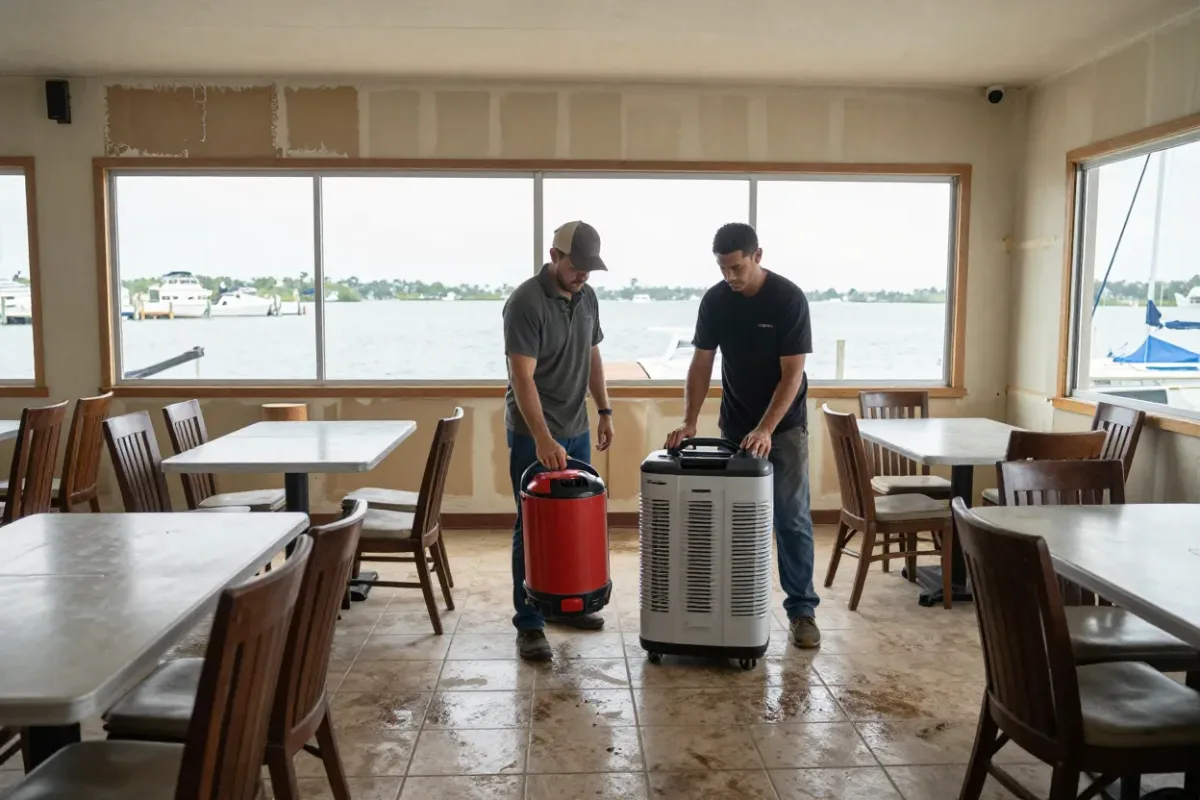
We respond with pumps and extractors sized for a flooded restaurant kitchen or a home's ground floor, air movers and dehumidifiers to begin drying on arrival, and moisture meters to establish how far the water traveled into walls and under floors. For business owners on the docks we prioritize getting the space dried and documented so reopening is not delayed. Our emergency water damage page explains the first hours.
Restoring Historic Homes, Dock Businesses and Newer Subdivisions
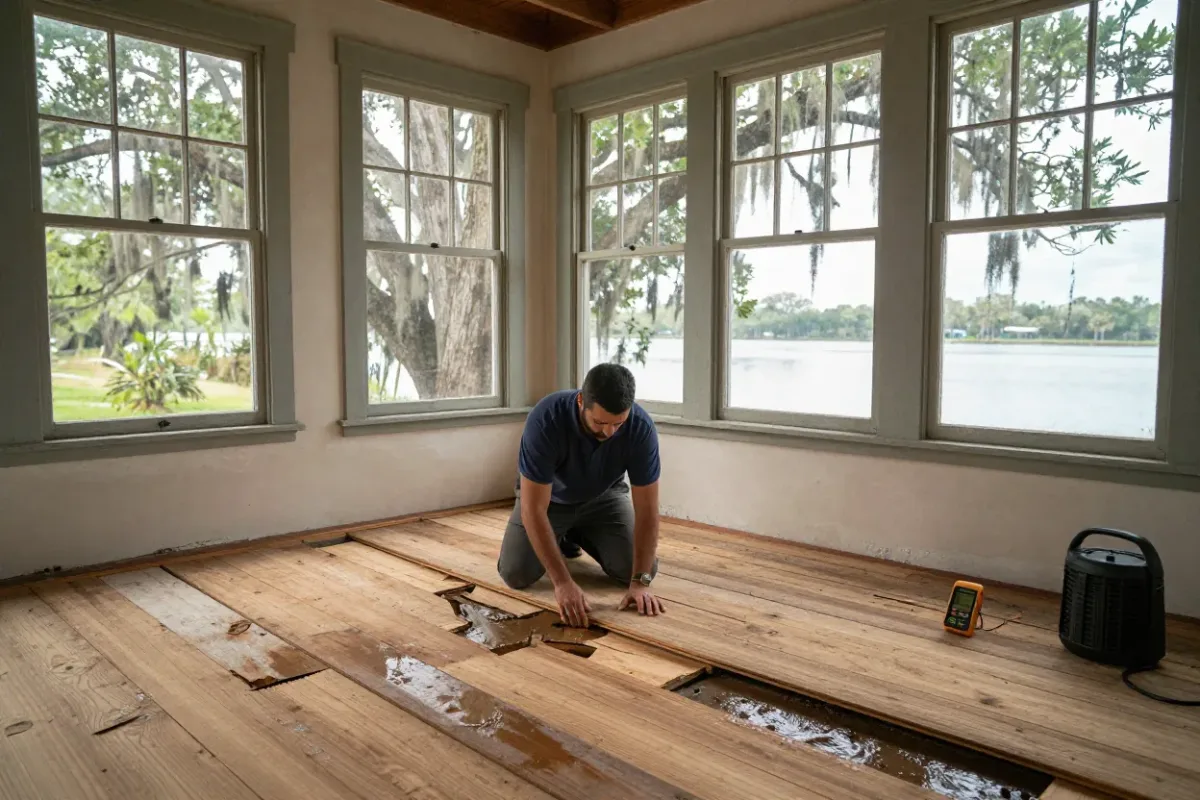
Tarpon Springs has three distinct kinds of buildings, and each needs its own approach. The historic homes of the Greektown and Spring Bayou districts are often wood-frame with plaster walls, wood floors and raised foundations, materials that can be saved with careful drying but that hold moisture in ways drywall does not. The restaurants and shops along the Sponge Docks are commercial spaces with kitchens, coolers and inventory. And the mid-century neighborhoods and newer golf-course and waterfront subdivisions on the eastern and southern edges, such as Crescent Oaks, Cypress Run and Mariner Village, are mostly slab-on-grade construction with attic air handlers and the usual plumbing risks.
In every case we start by mapping moisture with meters and thermal imaging, remove only what cannot be dried, and dry the structure inside a closed building with commercial dehumidifiers and air movers until logged readings confirm each material is back to its dry standard. Contaminated losses get cleaning and treatment before anything else, and repair waits until the readings confirm the building is dry. See our water damage restoration service page for a fuller description of each phase.
Flood Cleanup in Tarpon Springs After Idalia, Helene and Milton
Three storms in two years reshaped how this city thinks about water. Idalia's surge in 2023 flooded low streets and businesses around Whitcomb Bayou. Helene's surge in 2024 topped the seawall at the Sponge Docks and left three to four feet of seawater inside the restaurants and shops on Dodecanese Boulevard, along with the homes near the water; several business owners noted afterward that they lacked flood insurance because of cost or availability, and the city set up a dedicated Helene information and recovery page. Milton arrived less than two weeks later with 10 to 15 inches of rain across the county, on ground that was already saturated.
Seawater from the bayous carries salt, sewage, fuel and marine debris, so flood cleanup means removing what it soaked, including drywall and insulation from the water line down, cabinet bases, restaurant millwork, carpet and flooring, then cleaning and disinfecting the slab, block and framing and drying the shell under air filtration. Historic wood and plaster are assessed piece by piece rather than removed wholesale. Our flood restoration service page describes this work, and the first 24 hours after a flood guide covers what to do before we arrive.
Water Damage Repair From the Docks to Lake Tarpon
Repair after a surge loss on the docks means new drywall from the flood line down, replacement of counters, cabinets and display millwork, doors, trim, flooring and paint, coordinated with the electrical and equipment work the business needs before reopening. In a historic home it means plaster patching, drying and refinishing wood floors where they can be saved, and replacing trim and siding to match the original. In a subdivision home near Lake Tarpon after a plumbing loss it is usually drywall, baseboards, cabinet bases, flooring and paint in the rooms that were wet.
We write the repair scope from the mitigation photographs and drying logs so your adjuster can follow each item back to the loss, and we separate storm damage from prior wear. For businesses without flood coverage, clear documentation still matters for other assistance and for tax records, and we provide it the same way.
Mold Removal in Tarpon Springs
After Helene, the mold problems we found in Tarpon Springs were in buildings that were mucked out and reopened quickly without drying inside the walls, and in historic homes where plaster and lath held moisture long after the surface felt dry. Outside of storms, the usual sources apply: closet and attic air handlers, the wall behind shower tile, kitchen cabinet backs after a slow leak, and crawl spaces under raised older homes near the bayous where the ground stays damp.
Our mold cleanup corrects the moisture source, contains the area, removes and bags affected porous materials, HEPA-vacuums and cleans what remains, and verifies the space is dry before it is closed. Spraying or painting over growth is not a repair. The mold remediation page explains our method, and our guide to hidden mold after water damage is worth reading before any wall that flooded in 2023 or 2024 gets repainted.
What Brings Water Into Tarpon Springs Buildings
Bayous that open onto the Gulf, a historic commercial waterfront, older wood-frame homes and newer inland subdivisions produce a wide range of losses. The causes we see most often:
- Gulf surge entering through Spring, Whitcomb and Tarpon bayous into low streets, homes and businesses
- Seawater topping the seawall at the Sponge Docks and flooding restaurants and shops on Dodecanese Boulevard
- Heavy rain on a high tide backing up into the lowest blocks around the bayous
- Intense summer thunderstorms with wind-driven rain entering through roofs, windows and doors
- Restaurant kitchen, cooler and plumbing failures in dock businesses
- Plumbing leaks under raised historic homes that go unnoticed in the crawl space
- Supply line, water heater and appliance hose failures in mid-century and subdivision homes
- Air conditioning condensate overflows in attic and closet air handlers
Our Restoration Steps
A seawater-flooded shop on the docks and a wet ceiling in Tarpon Heights move through the same eight steps so that nothing is rebuilt over moisture.
- Inspection and moisture mappingWe identify the source, classify the water and map wet materials with meters and thermal imaging, including plaster, lath and the crawl space under a raised home.
- ExtractionPumps and extractors remove standing seawater or rainwater from floors, kitchens, garages and ground floors before drying begins.
- Removal of unsalvageable materialsSurge-soaked drywall, insulation, cabinet bases, millwork and flooring are cut out and bagged; historic materials are assessed individually.
- Drying and dehumidificationAir movers and commercial dehumidifiers run in the closed building with readings logged daily until every material meets its dry standard.
- Cleaning and disinfectionSurfaces touched by seawater or sewage are cleaned and treated, with HEPA air scrubbers running during the work; commercial kitchens get extra attention.
- DocumentationPhotographs, water-line measurements, moisture logs and a written scope are compiled for you and your carrier or other assistance programs.
- RepairDrywall, plaster, trim, cabinets, millwork, flooring and paint are restored to match the building.
- Final checkA closing set of readings and a walkthrough confirm the space is dry and ready to reopen or move back into.
Tarpon Springs Areas We Serve
We respond throughout the City of Tarpon Springs, from the Sponge Docks and the historic districts around the bayous to Sunset Beach and Pointe Alexis on the Gulf side and the golf-course and waterfront subdivisions toward Lake Tarpon.
Tarpon Springs Neighborhoods
- Downtown Tarpon Springs
- Greektown / Sponge Docks
- Spring Bayou
- Tarpon Bayou
- Sunset Beach
- Pointe Alexis
- Tarpon Heights
- Crescent Oaks
- Cypress Run
- Mariner Village
- Tarpon Cove
Nearby Communities
Our Tarpon Springs crews also cover northern Pinellas and the communities just across the Pasco line. Several have their own pages:
First Steps for Homeowners and Business Owners
These actions are safe for most people and will limit the damage before our crew reaches you.
- Do not go into rising water to save the businessIf seawater is coming over the seawall or up the street, leave. Inventory and equipment can be replaced.
- Shut off the water for an indoor leakClose the fixture valve or the main. In a restaurant, also shut down ice machines, dishwashers and other water-fed equipment if you can do so from a dry spot.
- Keep clear of wet electrical panels and equipmentSwitch off breakers only if the panel is dry and reachable without stepping in water. Do not touch submerged equipment, coolers or outlets.
- Treat bayou and Gulf water as contaminatedIt carries sewage, fuel and marine debris. Keep people and pets out of it and do not run fans over it.
- Photograph the water line inside and outRecord how high the water reached on walls, coolers and cabinets, the source, and every damaged item before anything is moved.
- Move what you can to higher shelvesLift stock, electronics, rugs and furniture, and set blocks or foil under anything that must stay on a wet floor.
- Call Water Damage FloridaReach us at (888) 435-4769 and tell us whether the water was seawater, rain or a pipe, how deep it got and whether the building is a home or a business.
For storm losses, our hurricane water damage recovery guide covers the weeks of recovery that follow.
Tarpon Springs Water Damage FAQs
Our shop on Dodecanese Boulevard had feet of seawater inside. What comes out and what stays?
Drywall and insulation from the water line down, cabinet and counter bases, display millwork, carpet and most flooring come out. Tile, block and framing are cleaned and dried. Refrigeration, electrical and kitchen equipment that sat in salt water should be checked by the appropriate trades before use. We map the water line and give you a clear list before demolition.
We had no flood insurance. Is it still worth having the loss documented?
Yes. Several dock business owners were in that position after Helene. Clear photographs, water-line measurements and a written scope support other assistance programs, tax records and any future coverage, and they establish exactly what the storm did versus what was already there.
Can the wood floors and plaster in a Spring Bayou historic home be saved after flooding?
Sometimes. Clean water and quick drying favor saving them; seawater and a week of sitting wet do not. We assess plaster, lath and floorboards individually with moisture readings rather than removing everything, and we tell you honestly what can be kept.
We flooded in Idalia and again in Helene. Does the second event change the cleanup?
The cleanup steps are the same, but we look closely for moisture and growth that may have been left behind from the first event, especially inside walls that were repaired quickly. We document each event separately so the records stay clear.
Our subdivision home near Lake Tarpon is well inland. What water problems should we expect?
Surge is not the concern there, but supply lines, water heaters, condensate overflows, roof leaks in intense summer storms and heavy-rain flooding are. Milton's 10 to 15 inches of rain reached every part of the county, not just the waterfront.
Do you serve Holiday and New Port Richey across the county line?
We do. Our crews cover northern Pinellas and the neighboring Pasco County communities, including Holiday, Trinity and New Port Richey, and the rest of the state through our statewide service areas.